

Rattan Wardrobes: The Full Story
From ancient Indonesia to modern London bedrooms – why rattan is having its best moment in decades. I think you’ve noticed that rattan is everywhere right now. Walk through the home section of any interiors magazine and you will see it. Scroll through bedroom inspiration on Pinterest – it will be there. Visit a mid-to-high-end furniture showroom and you will probably see it. Woven panels in wardrobe doors, rattan-fronted cabinets, bedside tables and mirrors framed in natural cane – to be honest, it’s pretty much everywhere these days. It’s on the cover of Living Etc. It’s in the Pottery Barn catalogue. Interior designers who wouldn’t have touched it a decade ago are now specifying it for high-end London projects.
But the thing is – rattan isn’t new. Not remotely. It has been used in furniture for centuries. Traded across continents, embraced by Victorian aristocracy, beloved in the 1970s, then quietly dropped when minimalism arrived. The story of why it disappeared and why it’s back is actually quite interesting. And if you’re thinking about a rattan wardrobe for your home, understanding that story helps you think about it differently. Not as a trend to chase, but as a material with genuine depth behind it.
What Actually Is Rattan?
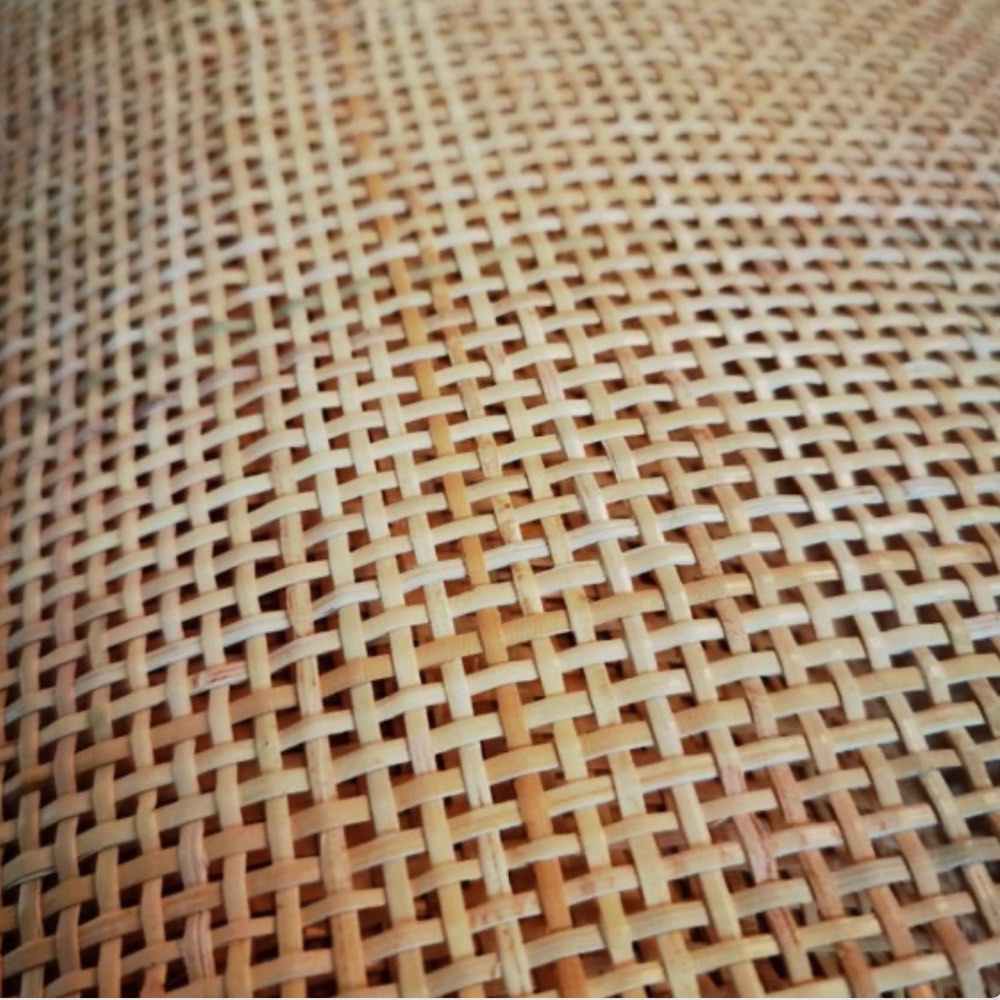
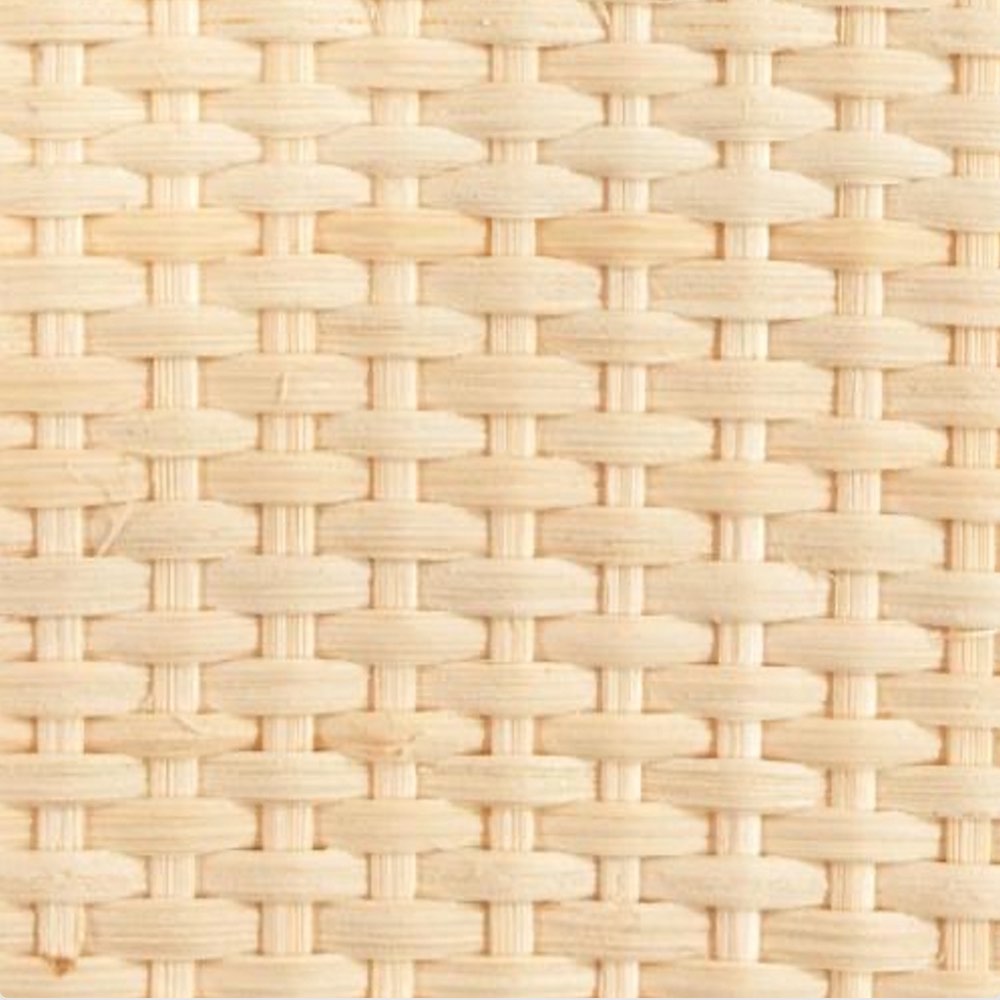
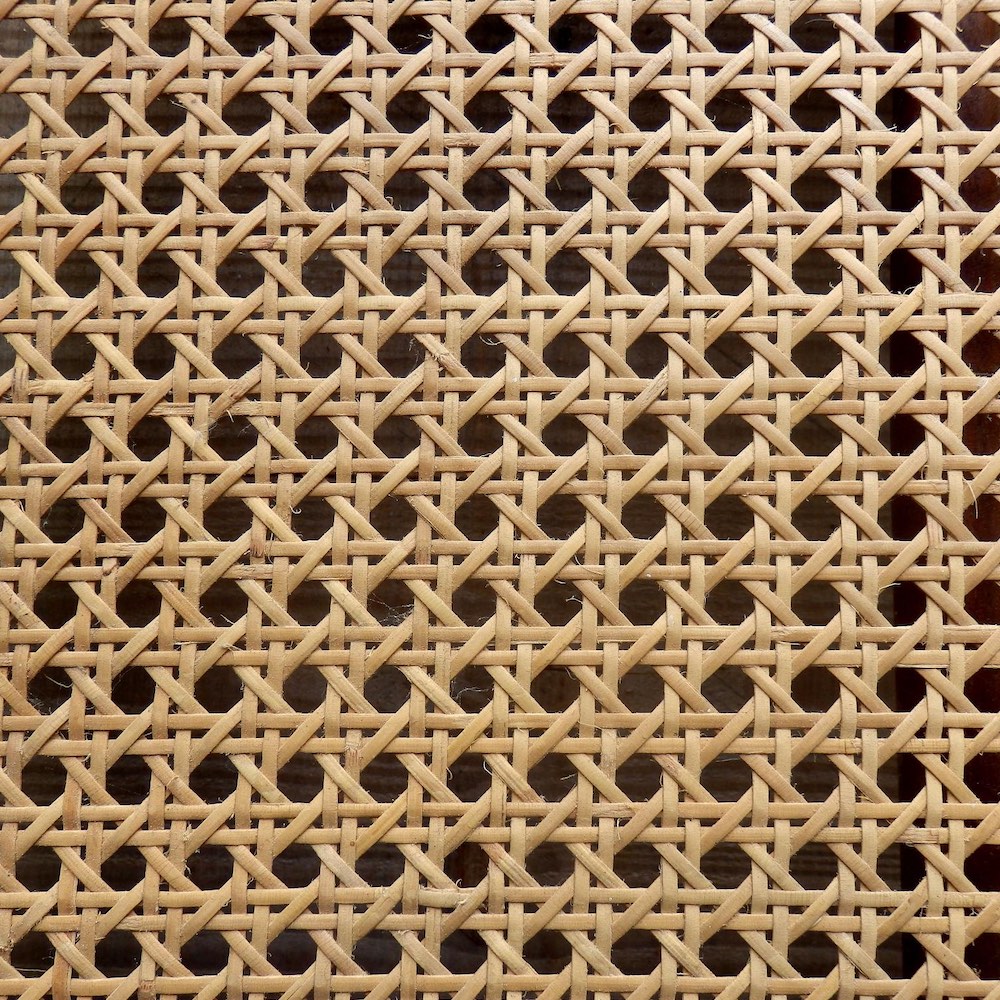
A lot of people use ‘rattan’, ‘cane’, and ‘wicker’ as a meaning for the same thing. But in reality, they’re not quite the same thing, and we will recommend to learn about the difference before we go further.
Rattan is a plant. To be a bit more precise, it’s a naturally occurring climbing palm vine, one of around 600 species. It grows in the tropical forests of Southeast Asia, predominantly in Indonesia, the Philippines, Malaysia, and parts of India. It grows fast. Around 2–3 centimetres per day at peak growth, reaching full maturity in five to seven years. That rapid growth rate is one of the reasons it’s considered more sustainable than most timber alternatives.
Cane comes from rattan. It’s produced by stripping the outer skin from the rattan vine, leaving a lighter, smoother, slightly glossy material that’s more refined in appearance and typically more durable. You’ll often see cane webbing used in chair backs, cabinet fronts, and fine furniture detailing. If you compare rattan and cane the latest neater, more elegant cousin of raw rattan.
Wicker is the technique, not the material. It refers to any weaving method used to create furniture. Wicker can be made from rattan, cane, bamboo, willow, or even synthetic fibres. So technically, a ‘wicker basket’ could be made of any woven material. So, when people say ‘wicker wardrobe’, they almost always mean is rattan woven using a wicker technique.
For fitted wardrobe doors specifically, the material is usually rattan. The raw vine is woven into panels and set within solid wood frames. That’s the look: natural, textured, warm. And also with a slight translucency that lets you see light and shadow move through the weave.
| “Rattan has been used in furniture for over 8,000 years. The current revival isn’t a trend. It’s a homecoming.” |
The History of Rattan
Woven plant materials have been used in household goods for a very long time. Archaeologists have carbon-dated wicker baskets found in Egypt to around 8,000 BC. That’s not rattan specifically. But it establishes that weaving plant materials into functional objects is one of the oldest human crafts. What this means is it’s not a recent design discovery.
Not everyone knows rattan became a traded commodity in the 17th century. Portuguese traders were among the first to bring it back from Southeast Asia to Europe. The recognised its structural qualities. It was surprisingly strong, lightweight, flexible enough to bend and weave. They quickly understood it is an ideal component for furniture. The British and Dutch East India Companies picked up from there, and by the 18th century rattan furniture was circulating among European merchants. It had a growing reputation as something desirable and exotic and was super popular among aristocracy.
But it was the Victorian era that really established rattan’s place in English interior culture. It was lightweight enough to move around conservatories and terraces. It didn’t warp or crack in heat and humidity. It was practical for colonial outposts in India or the Caribbean. And it carried a certain association with exploration and civilised adventure that the Victorians found irresistible.
One famous moment: the Sultan of Brunei presented Queen Victoria with a rattan sofa. That single gift effectively became a product endorsement. It goes without saying that if rattan was refined enough for the Queen, it was refined enough for anyone who wanted to signal good taste and worldly sophistication.
At the end of 19th and start of 20th century, rattan furniture was a feature of wealthy English homes. Not in every room. It was primarily associated with conservatories, verandas, and drawing rooms. But it was socially accepted and aesthetically respected in a way that it wouldn’t be again for nearly a hundred years.
Rattan in the 20th century
Rattan came back powerfully in the mid-20th century. Especially in the 60’s and 70’s. The vibe was around natural, handcrafted materials as a rejection of post-war industrial mass production. Rattan chairs, bedside and dressing table, sideboards, cabinets and other furniture became visual reflection of counter-cultural lifestyle.
And then we had 1980s era. The aesthetic shift was brutal and total. Chrome. Gloss. Neon. Artificial surfaces and ostentatious modernity became incredibly popular. Anything that looked handmade, natural, or was reminding 1970s style was essentially toxic in design terms. Rattan didn’t escape it either and got swept up in that rejection. It became associated with dated bohemianism, beige conservatories, and the kind of furniture your parents owned in a decade everyone was trying to forget.
It was still quite popular in garden furniture and holiday rental properties. But as an aspirational material for bedroom furniture or fitted wardrobes – it just disappeared from the conversation for twenty years or so.
Why Rattan Is Back
Rattan started coming back in the early 2020s. You could see it in the same trendy places which usually emerge first. Small independent furniture manufacturers, Instagram & Facebook accounts, the pages of Dezeen and House & Garden. By 2023–24 it had crossed over completely into mainstream retail. Famous brands such as Anthropologie, Pottery Barn, Serena & Lily – all started to introduce their major rattan collections.
But this revival feels different from the 1970s peak.
The 1970s embrace of rattan was primarily aesthetic. It was groovy, it was natural, it was of the moment. The current revival is driven by something completely different and deeper. A genuine change in how people think about what they buy for their homes.
Sustainability plays an important role in this. Rattan grows in five to seven years. It can be harvested without killing the plant. You cut the stems but the tip regrows. It requires no chemical treatment. Compared to slow-growth hardwoods or petroleum-derived synthetic materials, rattan has a genuinely strong sustainability story. And for a generation of homeowners who think seriously about that kind of thing, it’s actually quite important selling point.
The philosophy of bringing natural textures, organic forms, and plant-based materials into interiors has become the dominant conversation in residential design in the 2020s. It’s obvious that rattan fits this perfectly. It’s textured, warm, genuinely from the earth. In a bedroom that already has linen curtains, oak floorboards, and houseplants, a rattan fitted wardrobe doesn’t feel like a trend choice. It feels consistent.
And to be completely honest, the 1970s nostalgia angle helps as well. The decade is no longer embarrassing. It’s been long enough and it’s become interesting again. The natural materials and the imperfect handmade quality became a new trend in modern world. There’s a real appetite for all of it. Rattan rides that wave without being kitsch, because it has enough design history behind it that it can be used with restraint and still work beautifully.
| “The 1970s made rattan cool. Sustainability made it credible. Biophilic design made it essential.” |
Rattan in Fitted Wardrobes
We will try to explain the use of rattan in fitted wardrobes, because it’s different from garden furniture or free-standing pieces.


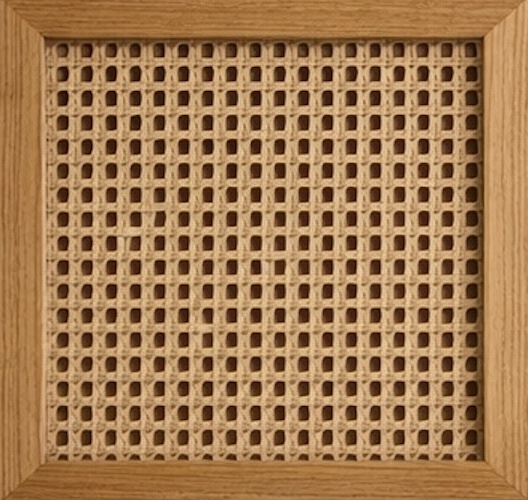
In a fitted wardrobe, rattan is used as panel inserts within solid wood door frames. The frame is typically made from solid timber (oak, walnut or ash), painted MDF, or another hardwood. It’s made to the exact dimensions of the door, and a woven rattan panel is set into it. The weave pattern can vary. Tight and traditional patterns give a more refined, symmetrical look. At the same time, more open weaves create a lighter, breezier aesthetic that works well in coastal or Scandi-influenced spaces.
The effect in a room is kind of striking. The rattan introduces texture at a scale that no paint colour or veneered surface can match. Light moves through the weave during the day. In the evening, if there’s lighting inside the wardrobe. It creates a warm glow that comes through the panel. From our experience and based on customer’s feedback – it all looks genuinely beautiful and is something most people haven’t seen before they experience it.
There are also practical benefits that aren’t obvious at first. Rattan panels allow air to circulate inside the wardrobe, which reduces moisture build-up and is genuinely better for the clothes stored inside. In London bedrooms, especially in Victorian terrace houses or old flats, where ventilation can be poor and damp is a recurring issue – this actually quite important. We’ve seen many cases where customers had a ventilation issues before. The solution usually was an installation of the ventilation grill. With rattan doors the solution is obvious.
The frames don’t have to be natural wood colour. That’s one of the most common misconceptions. Here at Urban, a rattan-panelled wardrobe can be stained or lacquered in green, slate grey, off-white or any other colour. With the natural rattan panel set against that painted frame it will look sophisticated and contemporary inside your bedroom. Not bohemian-cottage at all. The contrast between the painted, lacquered frame and the organic woven panel is actually one of the most interesting things about the design.
| What works well with rattan wardrobes: Dark frame colours — charcoal, bottle green, navy, terracotta — that make the natural rattan stand out. We can match any Farrow & Ball or Little Green colours or RAL.Linen or cotton curtains, natural fibre rugs, and warm wood floors – from our experience it works great with rattan Brass or unlacquered bronze hardware – it picks up the warm tones in the rattanRooms with good light – rattan rewards natural daylight, which moves through the weave in a way LED lighting can’t replicatePeriod properties where the organic quality of the material complements rather than fights the architecture |
What Urban Wardrobes Does with Rattan
At Urban Wardrobes, rattan is something we’ve been working with for years. It’s definitely not something we added to our Ranges Page because it’s having a moment. The difference is worth understanding.
The frames are solid oak or painted wood, manufactured in our London workshop. Every frame is built to the exact dimensions of your room. Because we don’t use standard modules, the wardrobe fits your space precisely, not approximately. The rattan panels themselves are real. We use natural rattan – not printed rattan-effect laminate, not synthetic webbing. Woven is available in several different patterns depending on the look you’re going for.
The frame can be lacquered in any colour. That’s not a small thing. It means a rattan wardrobe doesn’t have to be natural wood — you can have it in Farrow & Ball Railings, in any RAL shade, in a custom colour matched to your room. Just provide us with the colour you need and we will use it. The combination of a painted lacquered frame with a natural rattan panel creates a finish that feels genuinely designed, not off-the-shelf.
We work with interior designers and architects on a lot of rattan projects. The specification process is detailed. First of all, you choose the frame material and the frame colour. The rattan weave pattern can be selected as well in due course. The internal configuration and the carcass colour can be selected from our collection. The hardware is usually Blum – best manufacturer of wardrobe and kitchen mechanisms in the world. Every element is considered. The end result is a piece of furniture that’s been designed for your room, not chosen from a catalogue and installed with compromise.
Lead time is typically six to eight weeks. The showroom in Chiswick has sample panels in several weave patterns and frame colours, so you can see and feel the actual material before committing. That’s important with rattan – it’s one of those things where photographs don’t fully do justice to how it looks in person. So it goes without saying the showroom visit is recommended.
The Sustainability Argument

We mention rattan’s sustainability credentials not as marketing. They’re actually quite meaningful, and clients increasingly want to know more about this.
Rattan grows at around two to three centimetres per day, reaching full maturity in five to seven years. If you compare that to oak, it actually takes sixty to one hundred years. Really huge difference. Another thing is that it can be harvested without killing the plant. You cut the stems and the vine regrows. It requires no chemical treatment during processing. And it grows as a climbing vine within existing forest ecosystems. In a simple way it means responsible rattan cultivation doesn’t require forest clearance.
Around 80% of commercial rattan comes from Indonesia, with the remainder from the Philippines, Malaysia, Vietnam, and India. The industry provides significant employment for rural communities in those regions. I think everyone will agree this is a very important social aspect alongside the environmental one.
That said, it’s worth being transparent about the limits. Over-harvesting is a real issue in some regions, and not all producers can show where the rattan is coming from. When we source rattan, we’re looking for suppliers who can demonstrate that the harvesting rattan in a sustainable way. We work with verified suppliers and not just companies making sustainability claims on their website.
The long-term durability of rattan also matters here. A well-maintained rattan wardrobe lasts fifteen to twenty years. That’s the opposite of other furniture produced from cheap materials. It’s a considered purchase that will be part of your home for a long time, which is the most sustainable thing of all.
Rattan Maintenance

One of the questions we get asked most often – is rattan difficult to maintain? The honest answer is no – but there are a few things worth knowing.
The basics are simple. Dust with a soft cloth regularly. A gentle vacuum with a soft brush attachment works well for getting into the weave. You don’t need special products. Just avoid chemical solvents and cleaners, or anything that would damage the weave fibres.
Moisture is the main thing to manage. The ideal humidity range is around 40–50%. Too dry and the fibres can become brittle and crack over time. Too damp and you risk mould growth in the weave. In London, where rooms can swing between very dry in winter with central heating and damp in poorly ventilated spaces – this is worth thinking about. A fitted rattan wardrobe in a well-ventilated room will look good indefinitely. In a room with persistent condensation issues, you’d want to address the ventilation first.
From our experience in the last few years, if the rattan does dry out and show minor cracking, a light treatment with boiled linseed oil on the affected area usually helps. It’s not a major intervention – more the kind of thing you might do once every few years if the room is particularly dry in winter.
The way rattan ages is actually one of its appeals. It develops a slightly deeper, warmer patina over time – not in a way that looks worn, but in a way that looks seasoned. A twenty-year-old rattan wardrobe that’s been properly maintained doesn’t look old. It looks considered.
| “A well-maintained rattan wardrobe doesn’t show its age. It shows its quality.” |
Is Rattan Right for Your Bedroom?


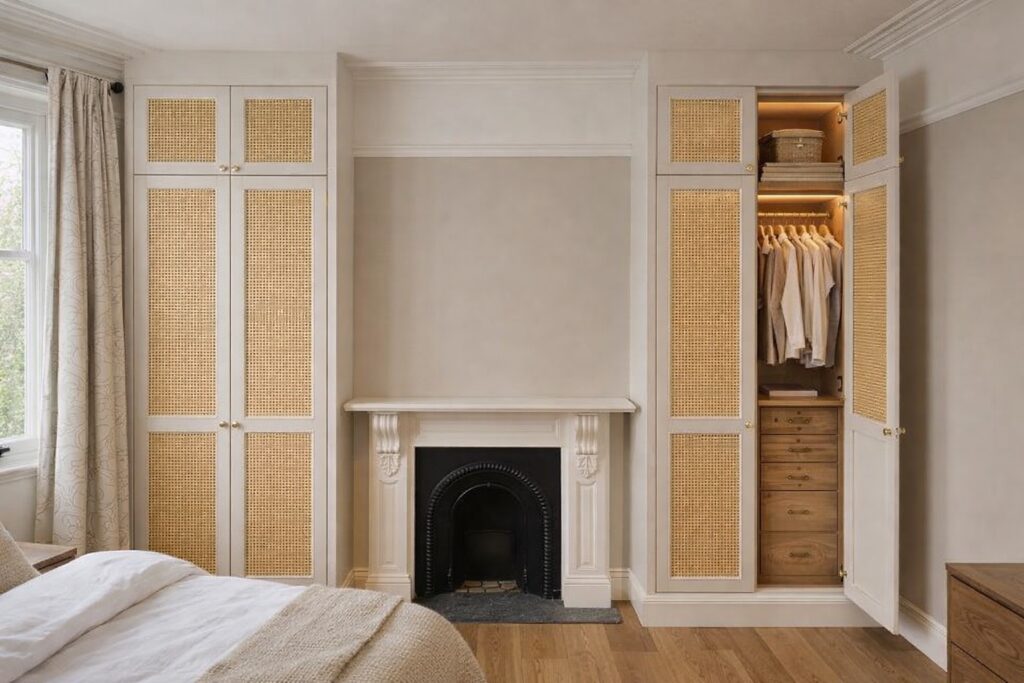
Not every room suits it. We need to be completely honest about this.
Rattan wardrobes work best in rooms where there’s already a degree of warmth and texture. Natural floor materials, soft furnishings, a colour palette that leans toward earthy or muted tones rather than stark white and cool greys. In a room designed around hard, cold surfaces and high-gloss finishes, rattan can feel like the wrong note.
They also work better in rooms with good natural light. The weave pattern is part of the beauty, and daylight moves through it in a way that makes the material come alive. In a dark north-facing room, some of that effect is lost.
Victorian and Edwardian properties in London are almost always well-suited. The proportions, the materials, the general aesthetic all complement rattan. Modern apartments can work well too, particularly where the brief is to introduce warmth and organic texture into a space that might otherwise feel clinical. What tends to work less well is the contemporary-industrial style: exposed concrete, steel windows, polished floors – where rattan’s warmth is simply a mismatch with the rest of the room.
If you’re not sure, come and see it. The showroom in Chiswick has rattan panels in several frame colours alongside other material options. It’s much easier to make that decision when you’re holding a sample against your phone screen showing the bedroom you’re working with. If needed we can produce a sample of the rattan for you so it can help you to make a decision.
| Rattan Fitted Wardrobes Made in London Urban Wardrobes makes bespoke fitted wardrobes with real natural rattan panels in London. The frames are solid oak or painted wood. Lacquered in any colour you choose. The rattan itself comes in several woven patterns, from tight traditional weaves to more open, contemporary styles. Every wardrobe is built from scratch for your specific room, which means alcoves, sloped ceilings, and awkward London spaces are handled as standard. If you’ve been looking at rattan wardrobe inspiration online and wondering whether it’s achievable in your bedroom – it probably is. Come and see the panels at our Chiswick showroom and we can talk through the options. See our rattan wardrobe range at urbanwardrobes.co.uk |
FAQ
Will rattan fitted furniture increase the value of your house?
Rattan fitted furniture can definitely add value, especially if it suits your home style and is made to a high standard. If your rattan fitted wardrobe is properly designed, made from scratch, and maximises your space while also looking great, it can make a strong impression. The key is choosing the right joiner. Spending a bit more on a quality rattan fitted wardrobe can be beneficial when you decide to sell your house in the future.
Will rattan fitted wardrobes help with airflow and humidity?
Yes, they can. Rattan fitted wardrobes allow air to pass through the woven panels, which helps improve ventilation inside the wardrobe. If you have any humidity concerns, this can help reduce moisture build-up and keep your clothes in better condition.
If you decide to proceed with a rattan fitted wardrobe, what is the best next step?
The first step is to get an estimate from us. From there, you can decide on the style of your rattan fitted wardrobe. You can choose between lacquered wooden frames (in any colour) or solid wood frames such as oak, walnut, or ash. We also offer a selection of different rattan weave options, so you can pick the look that suits your space best.
If you’re unsure what rattan fitted wardrobe style to choose, how can we help?
If you’re not sure which style to go for, the best option is to visit our showroom in Chiswick. We have samples of doors and finishes, so you can see everything in person. We’ll help you choose the right look for your rattan fitted wardrobe, including colours, finishes, and also go through the internal layout to suit your needs. A showroom visit is a great way to get a clear idea and make confident decisions.

