

Common Built-In Alcove Wardrobe Mistakes and How to Avoid Them
A niche in a room is always a convenient place for storage, but it’s often where problems arise when it comes to installing a wardrobe. In old London houses, walls and ceilings are rarely straight, so even a slight skew can affect the result. This is where the main mistakes in design begin.
For fitted alcove wardrobes to work properly, it’s important not only to choose the style and contents, but also to assess the space itself correctly. Many problems can be avoided at the planning stage if you understand what usually “goes wrong”.
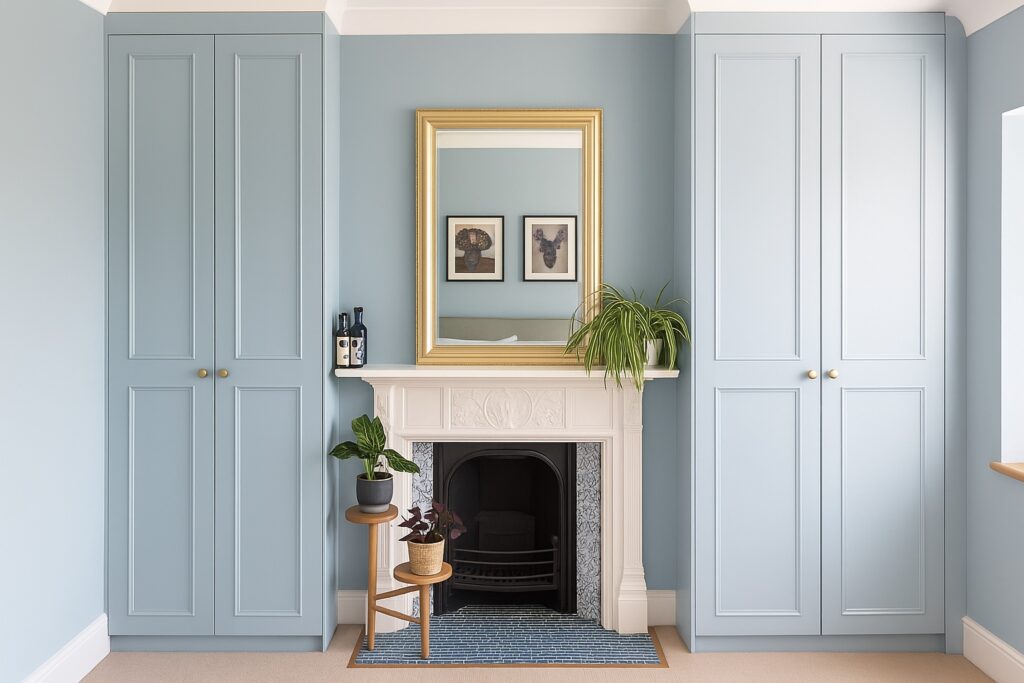
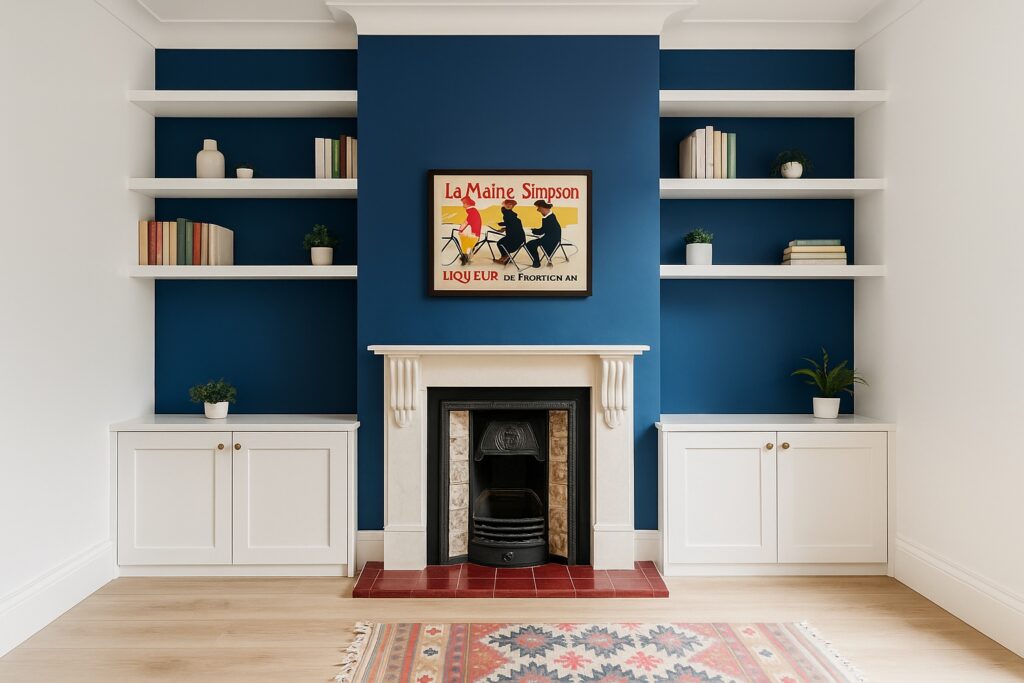
What Often Goes Wrong in Interior Wardrobe Design
A well-designed wardrobe is not about beautiful doors, but about how convenient it will be to use every day. That is why mistakes in interior planning happen more often than you might think: people simply underestimate how much space clothes take up and how alcoves actually work.
Below is the most common cause of problems with bedroom fitted wardrobes in alcoves, which easily destroys the whole idea of convenient storage.
Not Enough Space for Hangers
In Britain, there are fairly clear recommendations regarding the depth of sections with hangers: a minimum of 550–600 mm. Any less, and the hangers start to bump into the door, clothes get caught on the front, and the fitted wardrobes in alcoves themselves look narrower than they should.
The problem is especially noticeable in older homes, where alcoves appear deeper than they actually are. Visually, the space looks “normal”, but after measuring, it turns out that there is literally 20–30 mm of effective depth missing — and the section for hangers becomes unusable.
To avoid this, it’s essential to consider the following:
- The actual depth, taking into account plaster, cables and unevenness. Minus 10–15 mm is often “eaten up” even before installation.
- Door type. Sliding designs “forgive” a slight lack of depth, but swing doors require the full standard distance.
- The number of items to be stored on hangers. For two adults, a pull-out section of at least 1.2–1.4 m is usually required.
That is why, before designing alcove built-in wardrobes, it’s always a good idea to figure out your clothing style and how much stuff you plan to store. Some people need space for long coats, others for business shirts, and the configuration should be appropriate.
A competent approach at this stage allows avoiding situations where beautiful facades hide an inconvenient and sometimes completely non-functional interior space.
Too Many Shelves or Incorrect Proportions
In many wardrobes, it’s the interior that causes clutter. Shelves are made “for future use”, but in a cramped alcove, this quickly turns into an inconvenient maze where tall items don’t fit and small items have no clear place. The proportion between the rail, shelves and pull-out modules must be balanced, otherwise the wardrobe ceases to function as a system.
Below is a simple table to help you understand how to match the contents to real items.
| Type of items | Optimal zone |
| Jackets, coats, long dresses | Section with a bar 160–170 cm from the floor |
| Shirts, blouses, blazers | Section with a barbell 95–105 cm |
| Sweaters, knitwear, jeans | Shelves with a depth of 35–45 cm |
| Tech, boxes, seasonal stuff | Top shelves with a height of 30–40 cm |
| Accessories, underwear | Pull-out drawers 15–25 cm |
Correctly selected proportions prevent shelves from becoming overloaded and make wardrobes built into alcoves truly convenient for everyday use. This is precisely the case when a well-thought-out distribution of functions is more important than the number of sections.
Lack of Planning for Daily Habits
When planning wardrobes, people often forget to take into account the real needs of the family. If the wardrobe contains long dresses, bulky coats or household appliances, they need separate areas with sufficient height. The same applies to shoes: without low sections, they quickly accumulate in a chaotic manner.
When the contents aren’t adapted to your habits, even a well-made wardrobe loses its convenience — so it’s better to base your planning on how things are used every day.
Materials That Shape the Result: Typical Miscalculations
Materials used in built-in wardrobes in alcoves often work “on the edge”: alcoves tend to have higher humidity, poorer air circulation, and more noticeable temperature differences than open areas of the room. Because of this, poor-quality bases or finishes quickly deteriorate, delaminate or lose their colour. Most often, problems arise where the material is chosen “just to assemble the structure” rather than taking into account the conditions of the niche itself.
Moisture and Behaviour of Budget Boards
In old London houses, humidity levels can vary between 15% and 25% throughout the year, and this immediately affects cheap materials. Low-density chipboard reacts the fastest: it absorbs moisture, swells at the edges and gradually deforms facades and shelves. In bespoke alcove wardrobes, such changes are particularly noticeable because the structure fits tightly into the niche, and even a few millimetres of skew affect the operation of the doors.
In comparison, high-density MDF is more stable under the same conditions. Thanks to its more uniform structure, it reacts less to seasonal changes and holds its shape better. That is why experienced craftsmen often use dense MDF for the body and facades, rather than budget alternatives.
How Materials Affect Durability
High-quality sheet material allows for precise milling of parts, maintaining straight lines and ensuring clean painting. This is important not only for appearance, but also for the operation of mechanisms. If the board “wanders”, the hinges will loosen more quickly and the pull-out elements will jam.
For fitted wardrobes, the right choice of base and finish solves at least half of the future problems. Even in complex rooms with uneven walls, the wardrobe will remain stable if the base is made of a material with predictable behaviour.
Painting Mistakes
Problems with painting often arise when a quick factory coating is chosen instead of a neat manual one. In the factory version, the paint layer is thinner and less durable, so over time, scuffs and differences in tone appear. However, high-quality manual application gives a more even colour and better covers the joints, so the surface looks neat for longer.
How Doors Can Ruin Even the Perfect Alcove
In built-in wardrobes in alcoves, it’s often the doors that make a difference to how easy they are to use every day. If the system isn’t right, even a well-designed interior won’t work properly. So, before choosing fronts, it’s important to think about not just the style, but also how the design will work in the real space.
Swing Doors in an Overly Narrow Alcove
In small niches, hinged doors often cause inconvenience: the door leaf may touch a cabinet, the edge of the bed, or simply block the passage. To avoid this, it is important to allow for a sufficient opening radius — at least 450–500 mm in front of the facade. If the alcove is narrow or the adjacent furniture is close by, the swing system quickly becomes a source of daily discomfort.
Sometimes the problem becomes apparent after installation: the doors do not open to their full angle, knock against wall sockets or touch the handles of neighbouring cabinets. Such details seem insignificant, but they indicate that the space was assessed in a hurry.
Low-Quality Sliding Doors
Sliding systems work well in small rooms, but only if their fittings can withstand daily use. Cheap guides often start to make noise after just a few months. Added to this is play, when the door seems to “walk” along the rail — the result of saving on rollers or insufficient profile rigidity.
Another common problem is weak bottom guides. They wear out faster than the top ones, causing the facade to become warped over time. In fitted wardrobes in alcoves, such mistakes are more noticeable because the space is limited and any inaccuracy is immediately apparent.
A properly selected system operates quietly, moves smoothly, and does not create vibrations. This is what distinguishes a reliable solution from a quick fix, which may save money but is unlikely to withstand daily use.
When Saving on Installation Leads to Problems
In the case of alcove built-in wardrobes, it’s the installation that determines how the wardrobe will look and work every day. Even well-made elements can end up crooked if they’re put in without taking into account differences in the walls, floor, or depth of the niche. In older London homes, such deviations are found in almost every other room, so installation “by the ruler” rather than “by the level” almost always results in noticeable gaps and distortions.
In reality, more than 60-70% of problems with built-in structures arise during installation, not during production. The reason is simple: when installation is done in a hurry or without precise fitting, every millimetre starts to work against the user.
The most common mistakes during installation are:
- Incorrect starting level — facades ‘float’ and don’t match in height.
- Poorly set depth — doors catch on dressers or beds in the bedroom.
- Lack of compensation strips, which makes all the unevenness of the alcove visible.
- Too rigid fastening without allowance for wall movement — the structure ‘leads’ over time.
- Neglecting to check the gap — drawers don’t slide out fully or rub against each other.
A competent installer doesn’t work according to standard specifications, but takes into account the actual condition of the walls, floor and the niche itself. In such conditions, professional installation becomes no less important than materials or design. When this stage is carried out thoroughly, the structure works stably and doesn’t require minor alterations in the future. This is exactly how the Urban Wardrobes team approaches the installation stage. For us, attention to space is one of the basic skills of a craftsman.
Unexpected Expenses: Why Prices Are Rising
Even when the base cost is clear, nuances may arise during the design process that affect the cost of fitted alcove wardrobes. These are not “hidden” payments, but rather features of the space that cannot be accurately assessed until detailed measurements are taken. In London homes, a difference of a few millimetres between the top and bottom of a niche is common, so sometimes the design needs to be adapted during the manufacturing stage.
Most often, the budget changes due to complex parts of the project: non-standard angles, additional undercuts, deep alcoves, or the desire to expand the internal functionality. All this requires more time for precise fitting and correct installation.
Below is a brief summary of what can really affect the final estimate.
| Factor | How this affects the price |
| Uneven walls or ceiling | Additional levelling and precise trimming are required, which increases the working time. |
| Deep or non-standard alcove | The design becomes more complex, more materials are added. |
| Additional shelves, drawers, rails | Extended internal filling increases the cost of production. |
| Complex facades or decorative elements | More manual work and finishing touches are required. |
| Need for modifications during installation | Any changes “on site” add several hours to the installation time and, consequently, to the price. |
Usually, the scale of price increases becomes clear after measurements and final sketches. If technical challenges arise, the craftsmen explain in advance what needs to be refined and why. This approach avoids misunderstandings and helps to form an honest and transparent budget.
The Simplest Steps to Help Avoid Mistakes
Niches in old houses are rarely perfect, so any bespoke project involving alcoves requires careful consideration from the outset. Most difficulties with fitted alcove wardrobes arise not during installation, but at the planning stage, when small details are overlooked. Therefore, to ensure that the furniture works flawlessly, it’s worth considering a few simple things.
Practical tips from Urban Wardrobes experts:
- Check the drawings. The final plan should include accurate dimensions, shelf heights, and actual hanging depths.
- Specify the materials. What MDF or wood-based panels are offered, are there moisture-resistant options, what fittings are used.
- Ask for a preliminary layout. Even a simple 3D sketch helps you see if there is enough space for hangers and drawers.
- Discuss installation. In older rooms, slopes can be significant, so it’s essential to know how unevenness will be compensated for.
- Build in a budget reserve. Small changes usually appear after measurements — it’s better to take this into account right away.
These simple steps will help avoid most problems and ensure that you get the result you expect from a project designed specifically for your space.
When Every Detail Matters
Well-designed wardrobes built into alcoves are always the result of careful preparation: accurate measurements, realistic planning, and an understanding of how the space will be used on a daily basis. Mistakes here are usually minor in appearance but noticeable in use, so it’s easier to avoid them than to fix them.
Experience shows that solutions created for a specific room and lifestyle work best. That is why a craftsman who has been working on similar projects for years can immediately see where a niche needs to be “levelled”, where the layout needs to be changed, and where a different depth should be proposed. At Urban Wardrobes, this attention to detail has become a natural part of the process, resulting in projects that are cohesive, logical, and convenient for years to come.
FAQ
Does it make sense to build a wardrobe in an alcove if the space is very narrow?
Yes, even in a narrow alcove, you can get useful storage space. The craftsman simply selects the depth and design for a specific niche: somewhere shallow shelves are appropriate, somewhere — narrow sections for clothes. The main thing is accurate measurements, and then the space works better than a standard wardrobe.
Can lighting be installed in bespoke alcove wardrobes without any wiring issues?
Yes, if the electrical work is planned in advance. The craftsman immediately lays the cable channels, selects safe LED strips and correctly positions the power supply unit. In many cases, lighting can even be added to a finished wardrobe if access to the wall is still available.
What should I do if my built-in wardrobe starts creaking or the doors are warped?
This is usually easy to fix: adjust the hinges, tighten the guides or replace the shock absorbers. In most cases, the cause is natural movement of old walls or changes in humidity. These minor adjustments are part of standard post-installation maintenance.
Does it make sense to build a wardrobe in an alcove if the flat is rented?
Sometimes, yes. If the lease is long-term, a built-in structure keeps things tidy and saves space. Some modules can even be carefully dismantled and taken with you. But it’s better to agree on the decision with the owner — in older flats, such changes are often welcomed because they improve the tidiness of the home.
Why do the manufacturing times for built-in wardrobes sometimes vary?
The timeframe depends on several factors: the complexity of the layout, the condition of the walls, the choice of materials, and additional options such as lighting. If the craftsman sees significant irregularities during the measurement, it will take more time. During periods of high production load, the schedule may also shift slightly.

